

Walking Through the Valley: Finding Hope in Psalm 23 When Your Child Lives with Mental Illness

If you're caring for a child with a mental health condition, chances are you've become familiar with the valley.
It may be the phone call you dread receiving. The sleepless nights wondering if your child is safe. The appointment that leaves you with more questions than answers. The quiet grief of watching someone you love struggle while feeling powerless to make it better.
For many parents in our Hope for Brighter Tomorrows community, that child is now an adult. The responsibilities may have changed, but the love, concern, and heartache remain. The valley simply takes on a different shape.
Perhaps you're walking through that valley today. Or maybe you've just come through one and are catching your breath before another difficult season begins. One thing is certain: every parent who loves a child living with mental illness will spend time in the valley.
As a clinical social worker, I've spent more than thirty years walking alongside individuals and families affected by serious mental illness. As a parent, I also understand that this journey is deeply personal. The pain of watching someone you love suffer reaches places few people can fully understand.
The good news is that God understands.
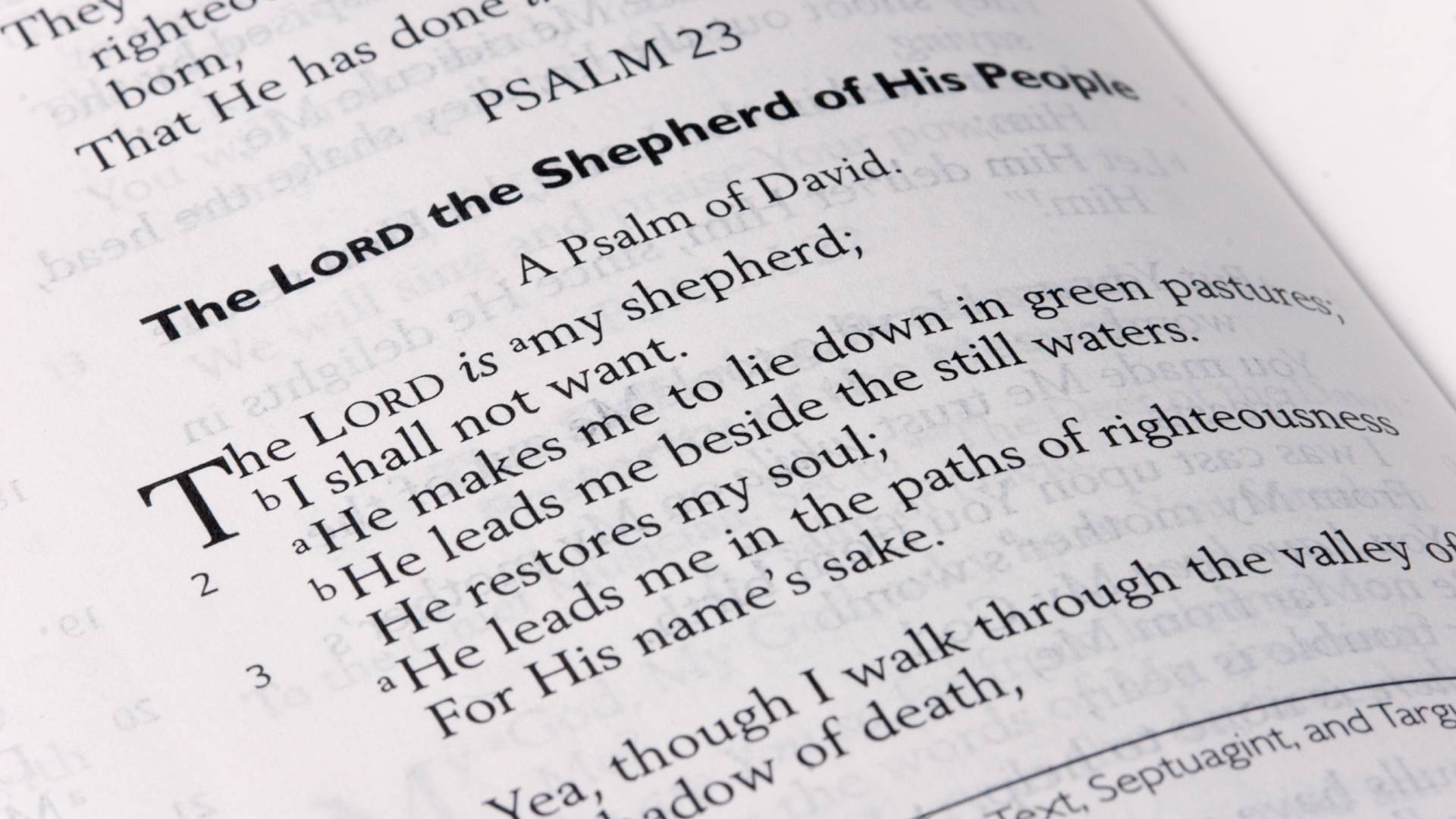
Long before modern psychology gave language to anxiety, grief, trauma, and resilience, Scripture spoke honestly about life in the valley. One of the clearest pictures is found in Psalm 23. Although many people associate this psalm with funerals, it is really a song about living. It reminds us that God does not promise a life without valleys. He promises his presence as we walk through them.
King David knew what it was like to face fear, uncertainty, and danger. Yet in the middle of his darkest moments, he discovered something that can sustain us today: the Shepherd never abandons his sheep.
Let's walk through Psalm 23 together.
The Valley Is Real
David never pretended the valley didn't exist.
He didn't minimize it, explain it away, or suggest that enough faith would make it disappear. Instead, he acknowledged it honestly.
"Even though I walk through the darkest valley, I will fear no evil, for you are with me."
Psalm 23:4 (NIV)
The Hebrew phrase translated "darkest valley" is tsalmaveth. It describes deep darkness, overwhelming shadow, and the nearness of death. David wasn't talking about a difficult afternoon or a temporary inconvenience. He was describing the kind of place where fear feels close, hope feels fragile, and every step requires courage.
If you're caring for a child living with mental illness, you know something about that kind of valley.
The valley may look different from one family to another. It may be the uncertainty of not knowing what tomorrow will bring. It may be watching your child cycle through periods of stability and crisis. It may be grieving dreams that have changed while still holding onto hope for what God can do.
Whatever shape your valley takes, it is real.
I've learned that one of the most healing things we can do is simply tell the truth about where we are. Healing doesn't begin by pretending life is easier than it is. It begins when we bring our whole story before God.
Research supports what many parents already know through experience. Studies have found that mothers and fathers caring for a child with anxiety, depression, or another serious mental health condition often experience significantly higher levels of stress, anxiety, depression, and emotional exhaustion themselves. The weight of caregiving affects the entire family.
Scripture never asks us to deny that reality.
Instead, Psalm 23 reminds us of something profoundly comforting. The Shepherd does not criticize his sheep for walking through the valley. He simply promises to walk with them.
Notice something else about David's words: he says, "Even though I walk through the darkest valley..."
Through.
Not around.
Not over.
Not pretending it isn't there.
The valley is not your destination. It is a place you are walking through. It may be a long journey, and there may be days when progress feels painfully slow, but the Shepherd is leading every step of the way.
That promise doesn't remove the valley. It transforms the way we walk through it.
You Were Never Meant to Walk the Valley Alone
The first words of Psalm 23 set the tone for everything that follows:
"The Lord is my shepherd, I shall not want."
Psalm 23:1 (ESV)
Before David says anything about green pastures, quiet waters, or dark valleys, he reminds himself of one simple truth: he belongs to a Shepherd.
Notice that David doesn't say, "The Lord is a shepherd," or even, "The Lord is our shepherd." He says, "The Lord is my shepherd." The relationship is personal. It is intimate. It is built on trust.
When life becomes overwhelming, our first instinct is often to focus on the size of the valley. David teaches us to begin by looking at the Shepherd.
That doesn't make the valley disappear, but it reminds us that we are not walking through it alone.
I've learned that one of the greatest predictors of resilience is connection. People are not designed to carry overwhelming burdens in isolation. God created us for relationship, both with him and with one another. That truth is woven throughout Scripture.
Ecclesiastes reminds us, "Though one may be overpowered, two can defend themselves. A cord of three strands is not quickly broken" (Ecclesiastes 4:12 NIV). The Christian life has never been intended to be a solitary journey. God often ministers to us through the presence of his people.
For parents caring for a child with mental illness, isolation can quietly become one of the greatest dangers.
Many parents pull away because they feel misunderstood. Others become so consumed with caring for their child that they neglect their own relationships. Some have been hurt by well-meaning people who offered simple answers for a very complex journey.
If that's been your experience, I'm deeply sorry.
But please don't let painful experiences convince you that you were meant to walk this road alone.
Ask God to help you find people who are willing to stay in the valley with you. They may be a trusted friend, a counselor, a pastor, a support group, or another parent who understands because they are walking a similar road.
You don't need people who have all the answers. You need people who are willing to stay. That is what the Good Shepherd does.
He doesn't shout instructions from the mountaintop. He walks beside his sheep. His rod protects. His staff guides. His presence comforts.
As parents, we often wish God would immediately remove the valley. Sometimes He does, but more often, he reminds us that we never have to face it by ourselves.
The Shepherd is with you.
And one of the ways he demonstrates his care is by surrounding you with people who are willing to walk beside you until the light begins to break through the shadows.
The Shepherd Restores the Weary Soul
One of the most beautiful promises in Psalm 23 is also one of the easiest to overlook.
David writes,
"He restores my soul."
Psalm 23:3 (NIV)
Notice what David does not say.
He does not say, "I restore myself."
He does not say, "I just need to try harder."
He does not say, "If I have enough faith, I'll never become exhausted."
He says, "He restores my soul."
That is good news for every parent walking through the valley.
Caring for a child with a mental health condition is emotionally, physically, and spiritually demanding. There are seasons when your energy is depleted, your prayers feel weak, and your hope grows thin. You may love your child deeply and still feel overwhelmed by the weight you carry.
That does not mean your faith is failing.
It means you are human.
I've seen how prolonged stress affects the mind, body, and spirit. Caregivers often experience compassion fatigue, chronic stress, anxiety, disrupted sleep, and symptoms of depression. Over time, many begin to believe they should simply push harder.
But God never asks us to push harder. The Shepherd knows his sheep grow weary, which is why he restores them.
Throughout the Gospels, we see Jesus responding to weary people with compassion, not condemnation. He welcomed all who were burdened. He invited them to come to him for rest. He never shamed people for being exhausted.
As parents, we are often far more compassionate toward others than we are toward ourselves. We encourage our child to rest, yet we ignore our own exhaustion. We remind others that God's grace is sufficient, yet we quietly believe we should be able to carry more than we can.
Psalm 23 gently challenges that way of thinking.
If the Shepherd believes his sheep need restoration, perhaps we can let go of any guilt for needing it too.
Restoration is not selfish. It is an act of trust, and it can take many forms. Sometimes restoration comes through quiet moments with God in prayer and Scripture, or through a trusted friend who reminds you that you are not alone.
Sometimes it comes through counseling, a support group, a day of rest, or simply allowing yourself to receive help.
These are not signs of weakness. They are often the very means God uses to care for his children.
Parents ask me, "How do I keep going?"
My answer is always the same: you were never meant to live on yesterday's strength.
The Shepherd offers new mercy for today. He restores your soul one day at a time, one step at a time, and often one prayer at a time. As you care for your child, do not forget that the Good Shepherd is caring for you.
You are not simply a caregiver.
You are also one of his beloved sheep.
The Shepherd Gives Us Purpose in the Valley
David continues,
"He guides me along the right paths for his name's sake."
Psalm 23:3 (NIV)
One of the hardest questions parents ask is, "What is God doing in all of this?" It is an honest question.
When your child is struggling, it can feel as though life has been put on hold. Dreams change. Plans are interrupted. The future becomes uncertain. It is easy to wonder whether your life has been reduced to managing one crisis after another.
Psalm 23 offers a different perspective. Even in the valley, the Shepherd is still leading.
His guidance does not stop because the road becomes difficult. His purposes are not canceled because life has taken an unexpected turn. He continues to lead us one faithful step at a time.
As parents, we often long to see the entire path ahead. God usually gives us enough light for the next step. That can feel frustrating, yet throughout Scripture, God has always formed his people through daily dependence rather than complete certainty.
This journey has likely changed you.
Perhaps you have become more compassionate toward people who suffer. Perhaps you listen more carefully because you understand hidden pain. Perhaps your prayers have become more honest and more dependent on God than ever before.
These are not the reasons your child struggles, but they may be some of the ways God is shaping you as you walk beside your child.
Faithfulness is not measured by outcomes we cannot control.
Faithfulness is measured by the next loving step we choose to take.
Some days that step is making another phone call. Other days it is setting a healthy boundary, sitting quietly beside your child without trying to solve every problem, or asking someone else to pray because you no longer have the words.
None of those steps may seem extraordinary, but in God's hands, ordinary acts of faithfulness become holy ground. The Shepherd is not asking you to carry tomorrow, he is inviting you to trust him today.
As you continue walking with your child, remember that your greatest calling is not to rescue them. Your calling is to faithfully love them while entrusting both your child and yourself to the care of the Good Shepherd.
He has never stopped leading you.
And He never will.
Keep Walking with the Shepherd
Perhaps today you find yourself deep in the valley.
You may not know how long this season will last. You may still have unanswered questions about your child's future. You may feel weary from carrying burdens that few people fully understand.
If so, I want to leave you with the hope of Psalm 23. The Shepherd knows the way through the valley because He has already gone before you.
He walks beside you when you feel alone.
He restores you when you are weary.
He leads you when the path is uncertain.
He reminds you that your identity is not found in your child's diagnosis or in the hardships you face. Your identity is found in being one of his beloved sheep.
As you continue caring for your child, remember that you do not walk this road alone. The Good Shepherd is with you every step of the way.
One day, every valley will come to an end. Every tear will be wiped away, every sorrow will be redeemed, and all things will be made new. Until that day, we continue walking by faith, trusting the One who promises never to leave us or forsake us.
If your loved one is in immediate danger or you are concerned about their safety, contact the 988 Suicide and Crisis Lifeline by calling or texting 988. If there is an emergency, call 911 and let the operator know your loved one is experiencing a mental health crisis.

